



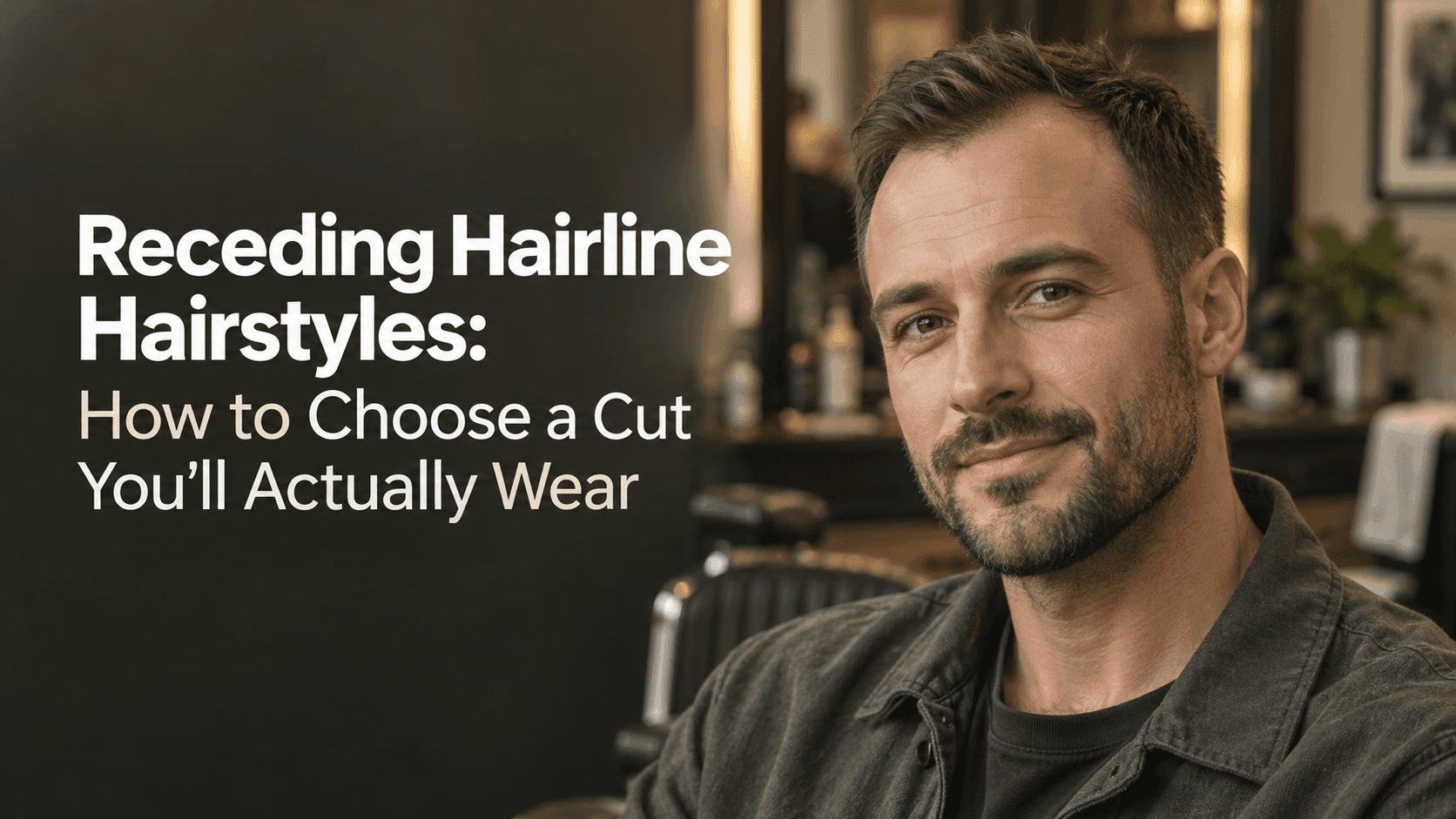
Receding Hairline Hairstyles: How to Choose a Cut You’ll Actually Wear
Receding Hairline Hairstyles: How to Choose a Cut You’ll Actually Wear
A haircut can look great in a photo and still feel wrong on your own head. Maybe the sides are too tight, the top needs more styling than you expected, or the front never falls the way it does in the reference. That’s why choosing receding hairline hairstyles is less about finding a magic cut and more about figuring out what suits your hair, routine, and taste.
A changing hairline doesn’t mean you need to hide your forehead. Some people prefer a close, clean cut; others want enough length to keep their usual shape. Both can work. The useful question is simpler: which parts of a haircut do you like, and can those details be adapted to your hair?
Start with the haircut you already have
Before trying something completely different, think about what’s working in your current style. Do you like the length on top? Is the back easy to manage? Maybe the only part you want to change is the way the front sits. Keeping one or two familiar details can make new receding hairline hairstyles feel less like a drastic change.
It also helps to notice how your hair behaves after washing. Does it fall forward, split near the temples, or dry with a natural wave? A barber can work with those habits. A cut that follows the way your hair grows usually takes less effort than one that requires you to force it into place every morning.
Take a quick photo in ordinary daylight before your appointment. It may show things that are harder to notice in a bathroom mirror, such as where the hair naturally parts or how the sides sit when they’re dry. You don’t need to analyze your face or measure your hairline; the photo is just a practical reference.
Receding hairline hairstyles aren’t one-size-fits-all
Two people can have a similar hairline and prefer completely different cuts. Hair density, texture, head shape, and personal style all matter. That’s why copying a haircut from someone with a different kind of hair can lead to disappointment, even when the cut itself is good.
For straight, fine hair, a shorter shape may be easier to keep neat. Leaving too much length can make the top separate into thin sections. For thick hair, a barber may need to remove weight so the cut doesn’t expand at the sides. Wavy hair often has its own direction and volume, which can be part of the style rather than something to smooth away.
When you look at receding hairline hairstyles, focus on the overall shape instead of the person’s exact hairline. You might like the short sides in one photo and the softer top in another. Those are useful details to bring together, even if neither picture is a perfect match.
Short crops and buzz cuts
A short crop or buzz cut can be a good option if you prefer a straightforward routine. There’s less length to arrange, and the shape tends to look intentional as it grows out. If you’re used to having more hair on top, though, it’s sensible to make the change gradually. Ask your barber to take off less first, then decide whether you want to go shorter.
A crop usually leaves some texture on top, while a buzz cut keeps the length more even. The difference may sound small, but it changes how the haircut feels. Crops give you a little room to style; buzz cuts need very little day-to-day attention. When comparing receding hairline hairstyles, think about which trade-off sounds better to you.
Textured tops and natural parts
If you don’t want a very short cut, a textured top can keep some movement without requiring a carefully shaped fringe. The barber can use layers to prevent the hair from sitting like a solid block. A small amount of matte paste can define the texture, though many cuts look fine with no product at all.
A natural part is another option. Rather than asking for a precise line, you can ask the barber to follow the direction your hair already takes. This can make receding hairline hairstyles easier to manage, especially if your hair tends to separate at the front. If a clear part makes your scalp more noticeable than you’d like, try a looser finish instead.
Longer styles and fringe
Longer hair can work too, but it tends to need more upkeep. If the front is long enough to fall forward, it may need a quick reset after washing or wearing a hat. A soft fringe can be part of the look, but a dense, straight fringe may not sit naturally on every hair type.
For receding hairline hairstyles with more length, ask the barber how the cut will look on an ordinary day—not just after blow-drying. You want to know whether it still works when your hair has air-dried and you’ve used little or no product. That answer can save you from choosing a style that looks good only in the shop.
What to bring to the barber
A reference photo is useful, but one clear photo is often better than a folder of twenty. Choose an image with hair texture close to yours, then point out the details you like. You can say, “I like how the sides are kept short, but I’d rather leave a little more texture on top.”
It’s also fine to explain what you don’t want. For example: “I don’t want a heavy fringe,” or “I’d like the temples to look natural rather than sharply lined up.” These comments help the barber adapt the idea instead of copying it exactly.
If you’re still deciding between receding hairline hairstyles, a digital preview can help you compare a few broad shapes. Use a clear, front-facing photo and change one style at a time. It won’t reproduce every detail of your real hair, so treat the result as a visual reference—not a promise.
Choose a cut that fits your week
Think about your actual routine. Do you get ready in five minutes, or do you enjoy styling your hair? Are you happy to visit the barber every few weeks, or would you rather stretch out appointments? A cut that fits your schedule is more likely to become a style you keep.
When discussing receding hairline hairstyles, ask what the haircut will look like as it grows. A good barber can tell you whether the sides will become bulky, whether the top will need reshaping, and when to book your next trim. That practical advice matters more than choosing a name for the haircut.
Most of all, you don’t have to make a big change in one visit. Try a slightly shorter version of your current cut, see how it feels for a couple of weeks, then adjust. The best receding hairline hairstyles are the ones you’re comfortable wearing—not the ones you chose because you thought you were supposed to hide something.