



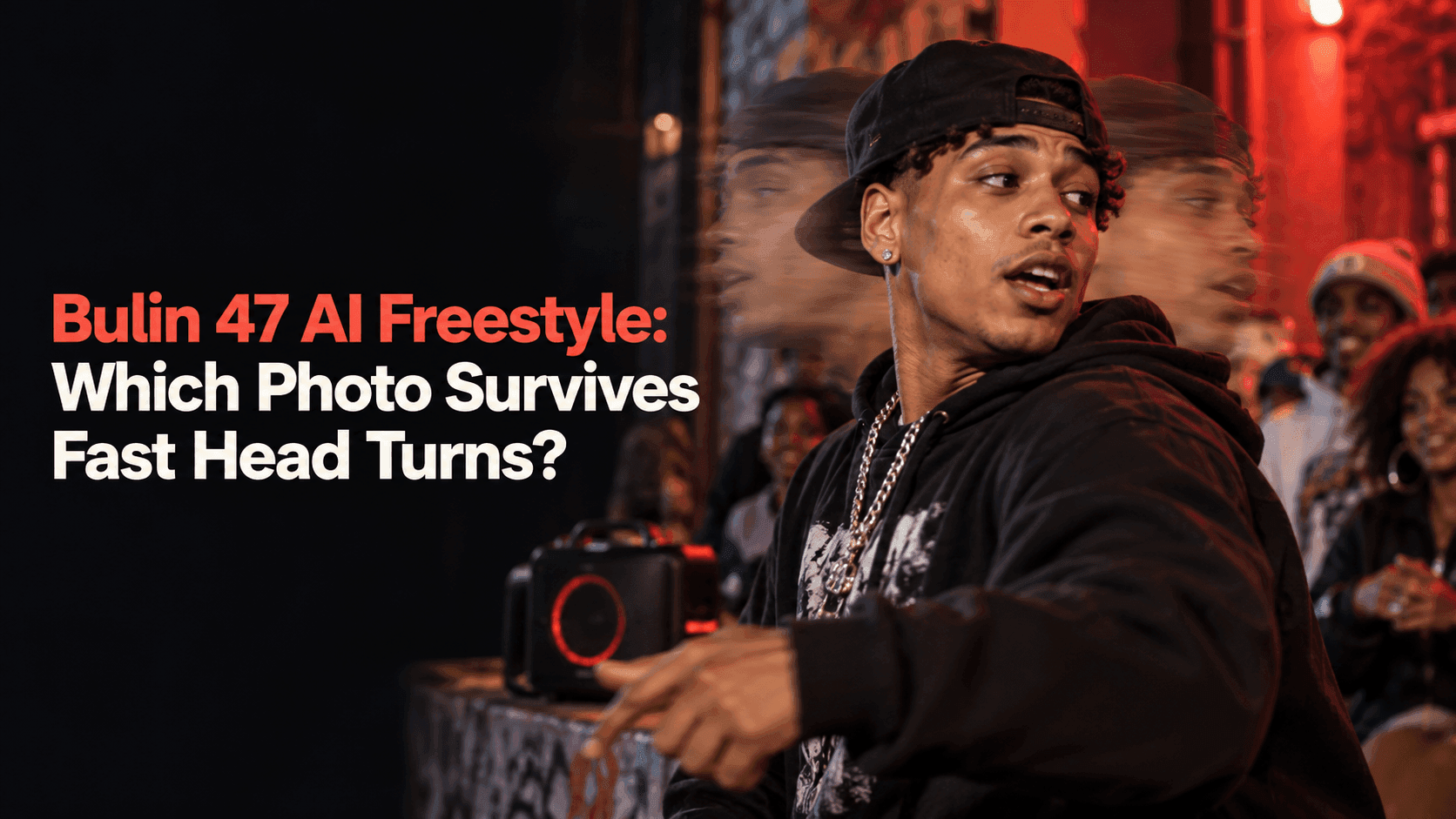
Bulin 47 AI Freestyle: Which Photo Survives Fast Head Turns?
Bulin 47 AI Freestyle: Which Photo Survives Fast Head Turns?
You probably have two photos of the same friend. In one, they look fantastic: camera held high, head tilted, half their face behind a curtain of hair. In the other, they're standing in a kitchen, looking straight at whoever took the picture. The first one wins on Instagram. For Bulin 47 AI Freestyle, I would try the kitchen photo first. Once that face starts turning to the beat, a flattering angle stops being much help. What matters is whether the person still looks familiar between the front view and the side view.
The trend grew out of a street freestyle filmed up close. Its remixes put another person into that moment. The movement makes the gag work; it also gives a weak photo nowhere to hide.
The photo you almost skipped
Look for the image you might normally call “just a decent photo.” Both eyes are visible. You can see the chin and at least part of the ears. The hair has texture rather than one dark, featureless mass. The shoulders are still in the frame. Nothing about it needs to be glamorous.
Perhaps the person is leaning toward the camera or caught between smiles. Small imperfections are often the details their friends recognize.
Put the candidates on your phone and look at them without zooming. If you have to stare at one for a moment to be sure it's your friend, don't expect a fast-moving video to make identification easier.
Bulin 47 AI Freestyle needs a face with room to move
The safest starting point is usually an eye-level, chest-up photo. The person can face the camera or turn slightly. A gentle angle shows some shape in the nose and jaw; an extreme profile makes the hidden side of the face a guess. A selfie taken from far above has the opposite problem: it tells you plenty about the forehead and very little about the chin.
Hair matters here. Long bangs across one eye may look great in a still, but they can become a moving patch that changes the face underneath. A clear hairline gives the clip a steadier outline. If glasses are part of how everyone knows the person, keep them; just avoid lenses washed out by glare.
Before uploading, try a loose vertical crop. Don't cut through the top of the head or remove both shoulders. The face should be large enough to read, with a bit of space around it for the turn.
Good light beats a dramatic shadow
Standing near a window is often enough. Can you see the shape of the face on both sides? That matters more than cinematic light.
Backlighting is the usual trap. The room and hair may glow beautifully while the eyes and jaw fall into shadow. A phone flash can cause a different problem, flattening the face or leaving bright spots on glasses. Neither gives the moving image much to hold onto.
If there are two otherwise similar photos, choose the one where the cheek, jaw, and nose remain clear at ordinary phone size. Sharpness helps, but it can't recover a feature that was never visible.
Keep one familiar detail in frame
A face isn't the only way we recognize someone. Think about the yellow hoodie your friend always wears, a particular fringe, or those glasses they never take off. One of those details can make the remix land before anyone has examined the mouth or ears.
Don't crop away an honest clue. If the photo shows a familiar jacket collar, leave it in. In an unfamiliar outfit, the face has to do all the work.
In Bulin 47 AI Freestyle, the action moves quickly. The viewer gets seconds, not time to study a portrait. A recognizable silhouette can help the face feel like the right person.
Watch the part everyone replays
When the video is ready, resist the urge to judge it from the thumbnail. Watch the whole thing once. Then stop at the turn and again when the performer faces the camera. Does the jaw keep its shape? Do the ears, hair part, and glasses stay where they belong? Does the outfit still look attached to the same body?
Don't reject a clip over one blurry frame. The real problem is a face that narrows, widens, or becomes someone else for several frames. Play it at normal speed again.
The mouth may look imperfect, too. That's worth noticing without expecting a still photo to provide a full performance. If the lower face is already hidden by a hand, scarf, or tight posed smile, another source image may give it a better start.
Try the second photo before another prompt
If the first result misses, swap the image before changing everything else. Keep the same person and compare the same turning moment. A clearer, more ordinary photo may fix more than a paragraph of extra instructions.
The Bulin 47 video template on Reveedo is the relevant starting point. Check the upload and generation choices currently displayed on the page rather than relying on a remembered set of controls; templates can change.
If the second attempt still looks off, don't force it. This particular photo—or this particular person in that photo—may not be a good match for the movement. There is no shame in choosing a different picture or leaving the joke as a still image.
Before you post it
Ask the person whose face you're using, especially if the video will be public. A friend may love receiving the clip in a group chat and still dislike finding it on a public account. Say clearly that it's a generated remix, and check the sound and disclosure rules wherever you plan to post.
The best pick is the photo that survives the middle of the video, not the one that looks prettiest before it starts. A readable face, a natural angle, and one or two familiar details give Bulin 47 AI Freestyle the thing the joke actually needs: your friend is still your friend when their head turns.