



AI Comic: Turn a Simple Idea into a Four-Panel Story
AI Comic: Turn a Simple Idea into a Four-Panel Story
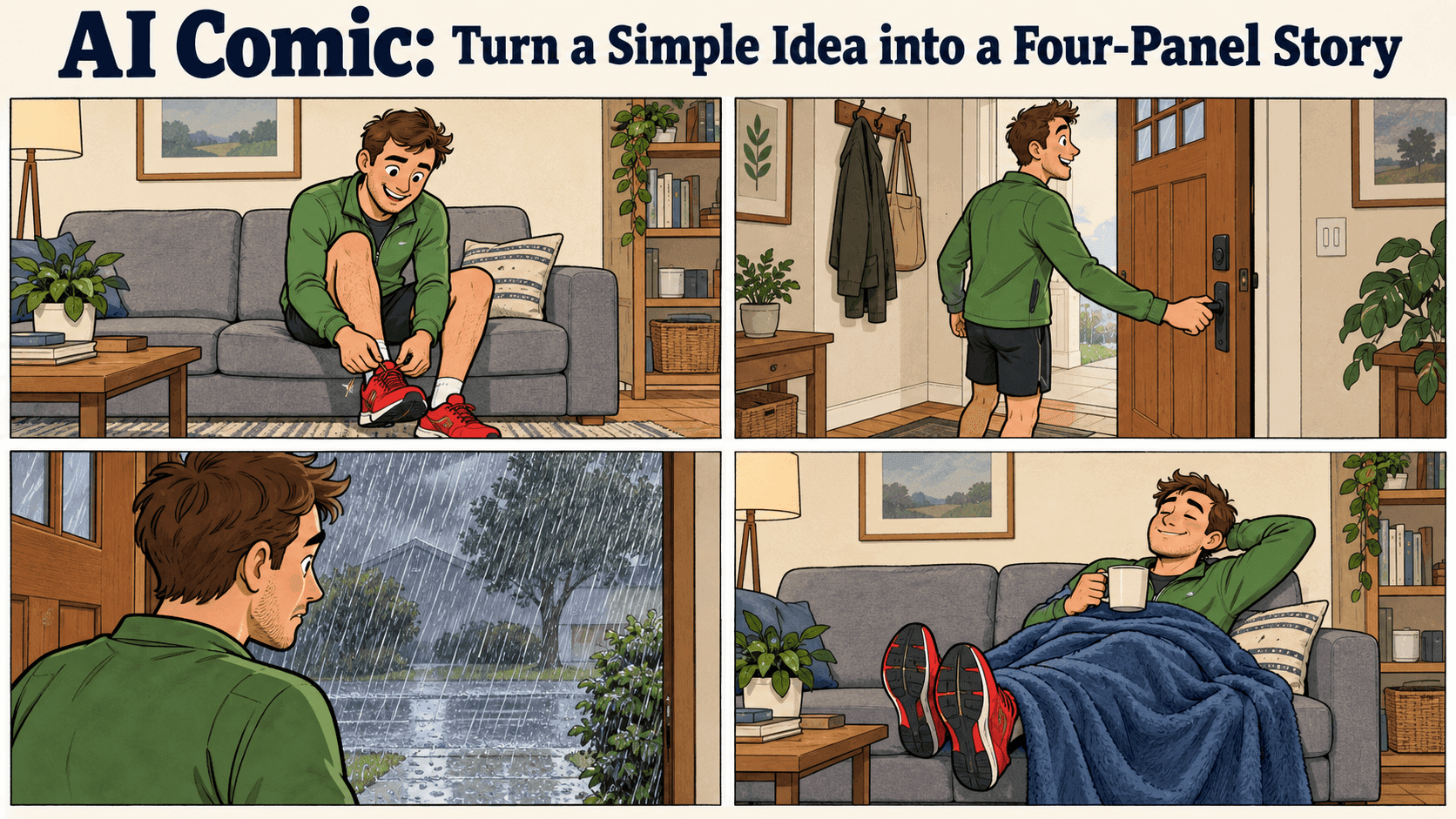
A man says he is going out for a run. He puts on his trainers, opens the front door, sees the rain, and goes straight back to the sofa.
You can probably picture all four panels already. That makes it a useful first AI Comic: the joke comes from a familiar decision, and you do not need a narrator to explain it.
Before worrying about illustration style, write the ending. Here, the last picture is a man under a blanket, still wearing his running shoes. Once that works, the rest of the page has somewhere to go.
Give Your AI Comic a Story You Can Draw
There is a difference between “he loses motivation” and “he closes the door and returns to the sofa.” The second gives you something visible.
For this AI Comic, use four moments:
- He sits on the sofa, tying his running shoes.
- He opens the front door with an eager expression.
- From the doorway, he sees heavy rain outside.
- He is back on the sofa under a blanket, shoes still on.
Keep the rain out of the first panel. Let the reader discover it with him. In the last panel, the shoes make the abandoned plan visible.
Read the AI Comic outline as though the captions have disappeared. If the story still makes sense, you can keep the dialogue short.
One line is enough for the ending: “Recovery day.”
Get One Character Right Before Drawing the Page
Choose a simple appearance: short brown hair, a green running jacket, black shorts, and red trainers. Use the same description throughout your AI Comic.
A reference image can help. Ask for the character on a plain background, in the drawing style you want. Save a version where the clothes and shoes are easy to see.
For the AI Comic style, try “clean black outlines, flat colors, expressive cartoon faces.” That gives the pictures a direction without filling the prompt with adjectives.
Where the selected model supports reference images, attach your character image. Reuse it for separate panels, too. It is guidance, so check that the model actually follows it.
Keep the room simple: a gray sofa, a blue blanket, and a wooden door. Those are enough to carry this story.
Turn the Script into a First Draft
For a rough AI Comic page, try this prompt:
Draw a four-panel comic in a two-by-two grid. Reading order: top left, top right, bottom left, bottom right. Use the character reference consistently. Panel one: the man ties his red trainers while seated on a gray sofa. Panel two: he opens the front door eagerly. Panel three: viewed from behind him, heavy rain falls outside the open doorway. Panel four: he rests on the same sofa under a blue blanket, red trainers still visible. Green running jacket, black shorts, clean outlines, flat colors. No text.
Look at the AI Comic as a page first. Does the door open onto rain? Can you see the shoes at the end? Extra fingers matter, but so does whether the joke survived.
If one AI Comic panel fails, generate that scene separately with the same reference. Arrange the usable drawings in a layout editor.
You can try a targeted correction in Reveedo's AI Image Editor, which accepts written edits to an existing image:
Make the visible trainers red. Preserve the character, blanket, sofa, composition, and drawing style.
Save the previous AI Comic before editing. Compare both afterward, since a requested change may affect other details.
Finish the Page at Reading Size
Add the final line in a speech bubble above the man. Keep the bubble clear of his face and shoes. Lettering your AI Comic in a layout editor makes spelling and spacing easier to adjust.
Now open the AI Comic on your phone. Can someone follow the pictures without enlarging them? Does “Recovery day” fit comfortably?
Show your AI Comic to someone before explaining it. If the ending needs a spoken explanation, check the pictures again. The fix may be a more visible shoe, not another sentence.
Keep an editable copy of the page alongside the character reference and panel images. If you later want a different caption or a translated version, you can change the words without regenerating drawings.